
Learning Forum on "Sufficiency Economy and the New Agricultural Theory in Myanmar"

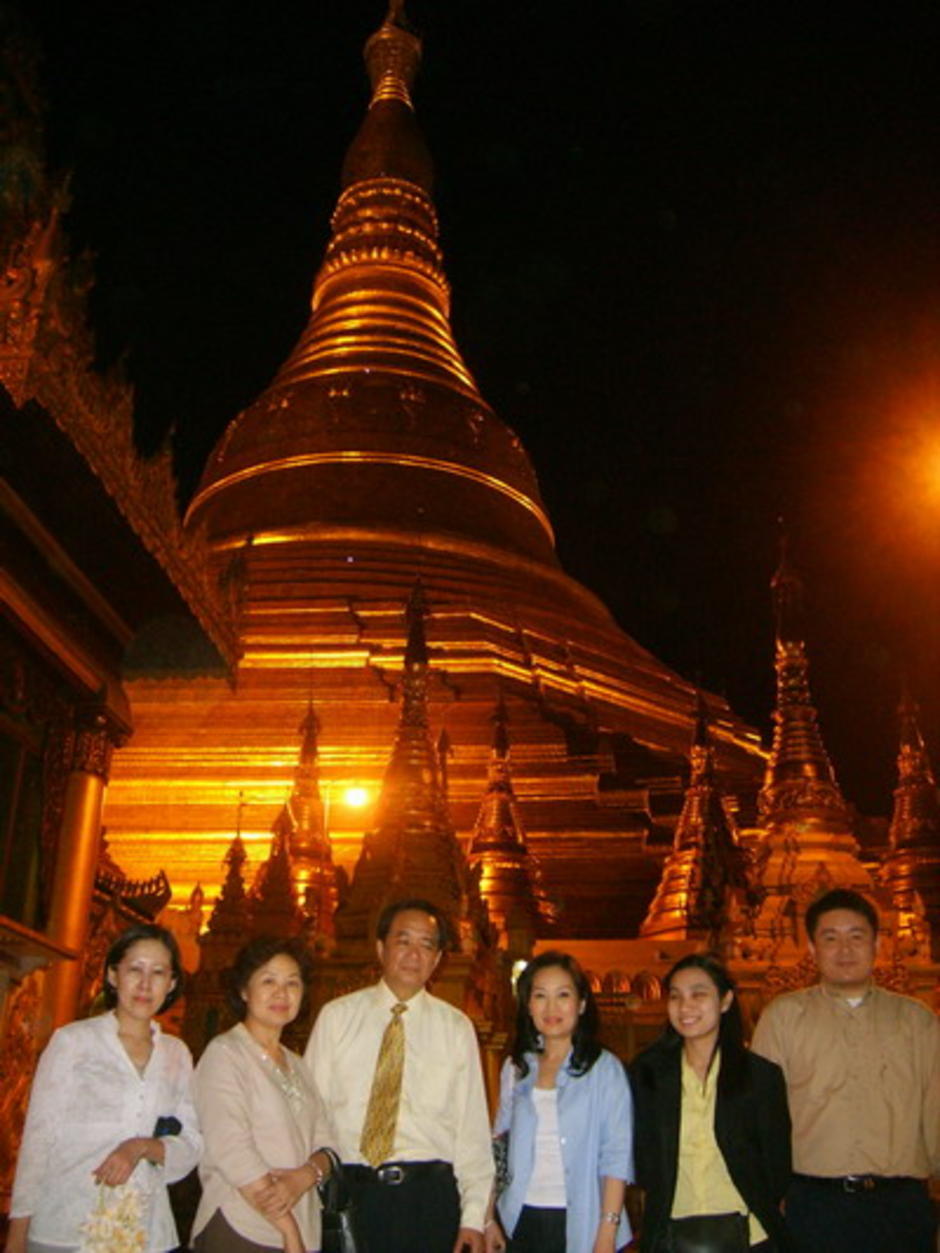
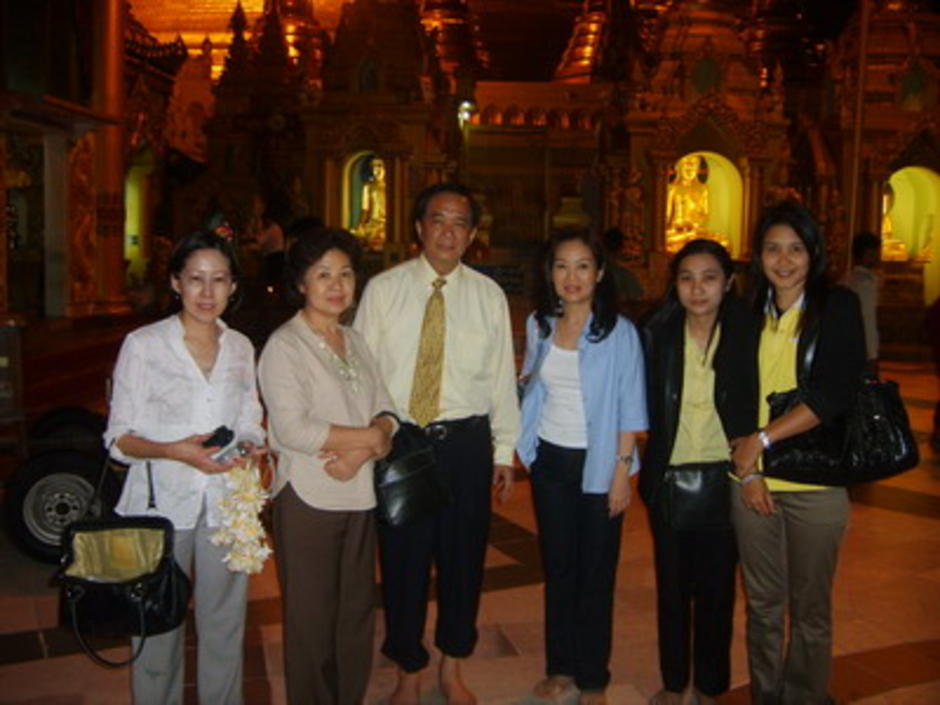
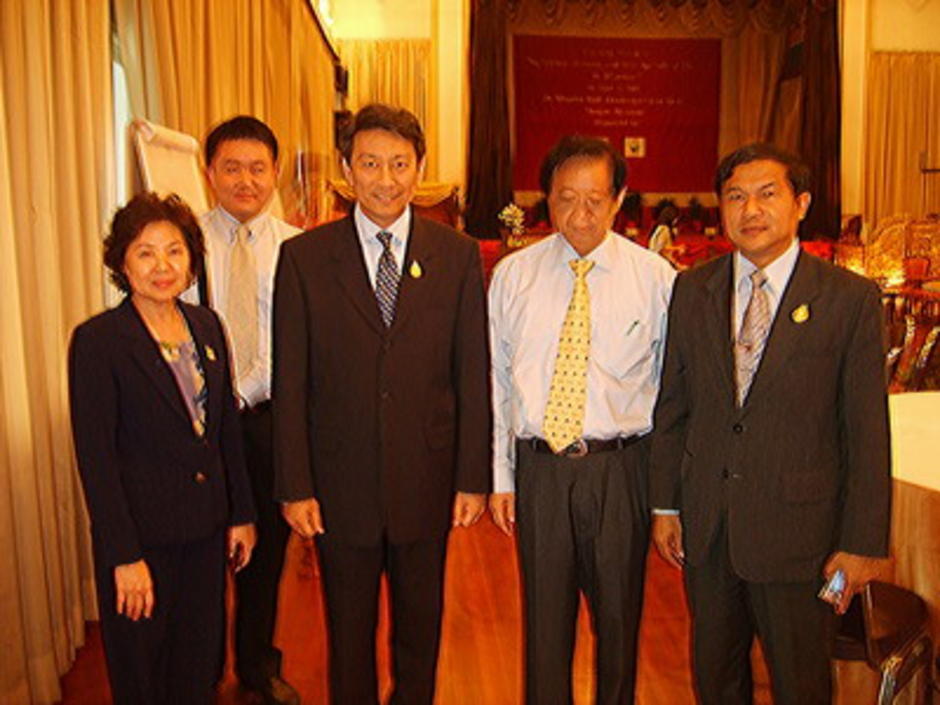
On June 5, 2007, Foundation for International Human Resource Development cooperated with Thailand International Development Cooperation Agency (TICA), Ministry of Foreign Affairs, the Royal Thai Embassy in Yangon and the Union of Myanmar, Federation of Chamber of Commerce and Industry (UMFCCI) to organize Learning Forum on "Sufficiency Economy and the New Agricultural Theory in Myanmar" at Kandawgyi Palace Hotel, Myanmar.
This is a follow up project of these projects.
§ Learning Forum on "Sufficiency Economy and New Agricultural Theory in Cambodia" co-organized by Foundation for International Human Resource Development, Department of Technical and Economic Cooperation (DTEC), Ministry of Foreign Affairs of Thailand, the Royal Thai Embassy in Cambodia, Rajabhat Institute Surin and Ministry of Agriculture Forestry and Fisheries of Cambodia during October 28-29, 2002
§ The follow-up project of the Learning Forum on "Sufficiency Economy and New Agricultural Theory" during December 1-10, 2003
§ The Follow-up Project II Learning Forum on “Leadership Development in Sufficiency Economy for Agriculture Value Added” in Siem Reap, Cambodia on May 19-21, 2004
§ Learning Forum “Tourism, Globalization and Sufficiency Economy in Myanmar” at Sedona Hotel, Yangon in Myanmar on July 21-23, 2004 co-organized by Foundation for International Human Resource Development, Department of Technical and Economic Cooperation (DTEC), Ministry of Foreign Affairs of Thailand, Royal Thai Embassy in Yangon, Tourism Authority of Thailand and Union of Myanmar Federation of Chambers of Commerce and Industry
§ Follow-up program on “Sufficiency Economy and New Agricultural Theory IV” organized by Foundation for International Human Resource Development and Thailand International Development Cooperation Agency (TICA), Ministry of Foreign Affairs on January 11-17, 2005
§ Learning Forum on "Sufficiency Economy and New Agricultural Theory in Kunming , China" co-organized by Foundation for International Human Resource Development, Thailand International Development Cooperation Agency (TICA), Ministry of Foreign Affairs, the Royal Thai Consulate-General Kunming in China, during March 14-15, 2006
§ Learning Forum on “Sufficiency Economy and the New Agricultural Theory in Ho Chi Minh City, Vietnam” on September 29, 2006
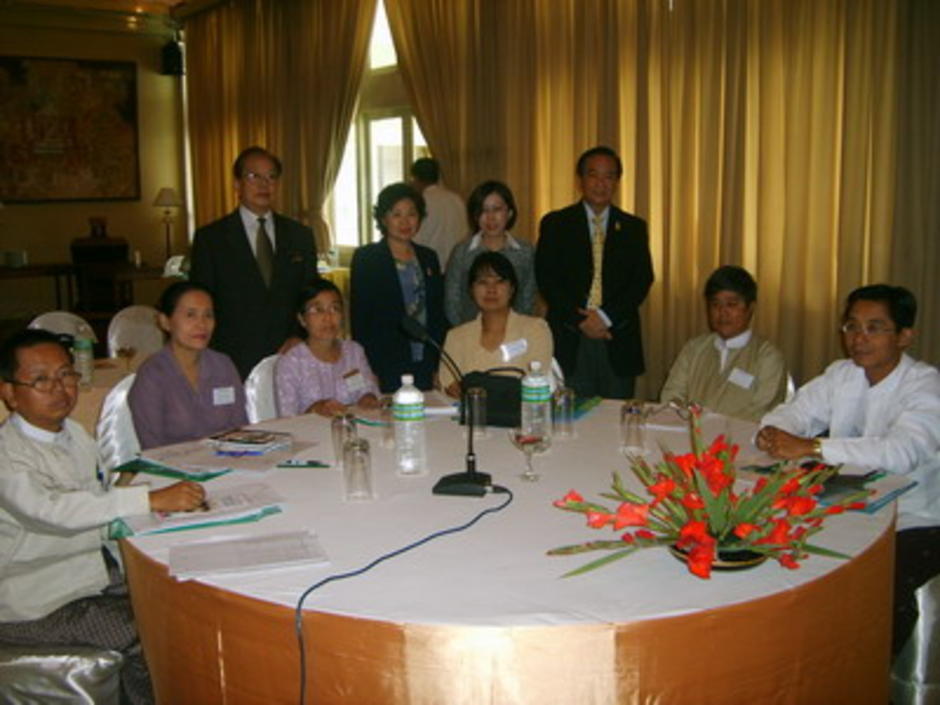
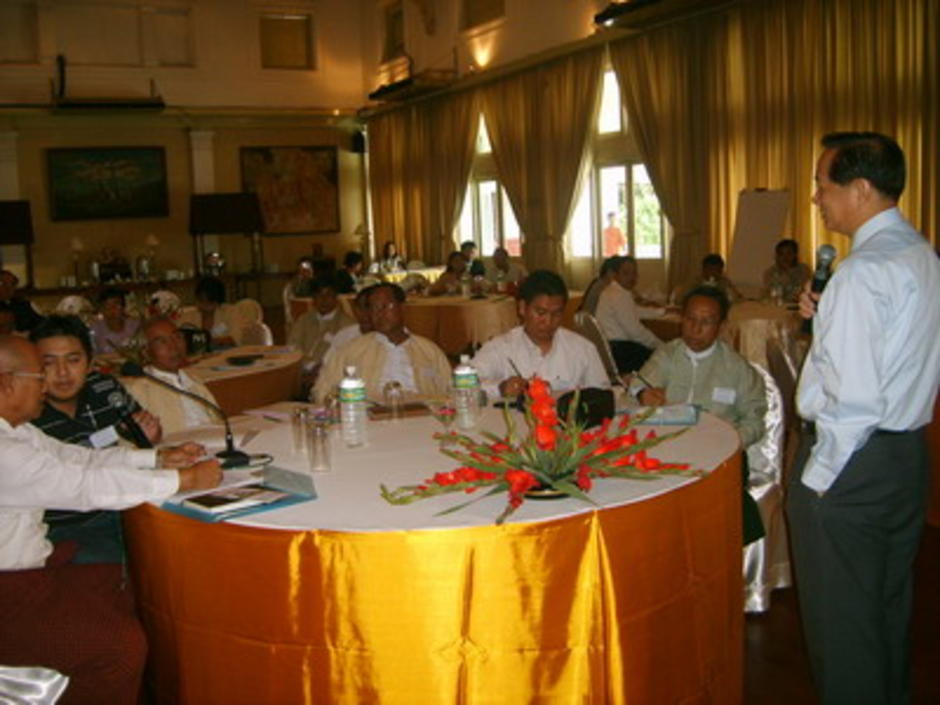
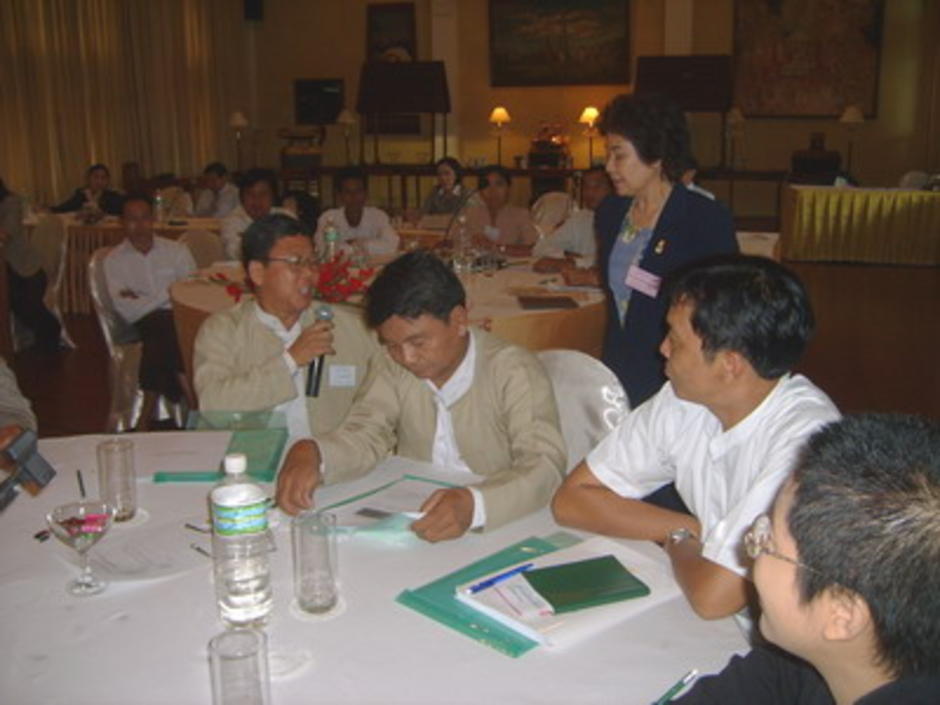
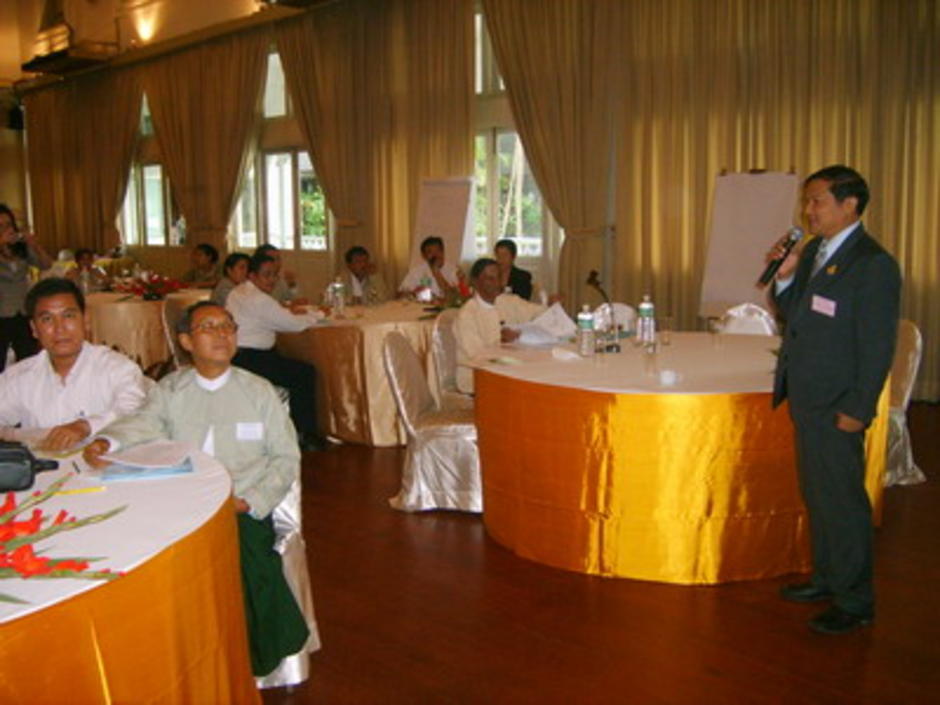
At this learning forum, it was a great honor to have Prof. Dr. Chira Hongladarom, Secretary-General, Foundation for International Human Resource Development to preside the opening ceremony.
After that, he asked the participants about the expectation from this Learning Forum. They expected to learn about globalization, Sufficiency Economy, contract farming, Thailand economic and market information, human resource development and sustainable development.
Then, he delivered the keynote speech on "Globalization, Sufficiency, HRD in Agricultural Sector; Learning for Myanmar". According to this speech, globalization is a process which is moving very fast and Myanmar must monitor the rapid change and globalization takes many forms.
§ Trade and investment liberalization
§ Financial liberalization
§ The introduction of digital revolution
§ The issues of Bird - flu and SARS
§ and lately international terrorism
§ and the speed of bilateral agreements such
as FTA
Myanmar should look for positive impacts of globalization. Myanmar should use open market to export more and IT for learning. Sufficiency Economy can warn Myanmar not to invest and expand too much. It can also remind the thinking of cause and consequences and managing risks. Ethics and knowledge are required. Sufficiency Economy can help Myanmar achieve happiness and maximize sustainable and long-term development of Myanmar's economy.
Recommended human resource development concepts for Myanmar are as follows.
§ 4L's consist of Learning Methodology, Learning Environment, Learning Opportunities and Learning Communities. 4L's encourage all the time learning about agricultural development.
§ 8K's consist of Human Capital, Intellectual Capital, Ethical Capital, Happiness Capital, Social Capital, Sustainability Capital, Digital Capital and Talented Capital. 8K's promote human capital of Myanmar to be able to compete more and allow farmers to think for them.
§ 3 Circles Theory encourages Myanmar to develop management skill, organizational competency, leadership competency, entrepreneurial competency and global competency.
The afternoon session started with the presentation on "Role of Agriculture, the New Theory and Economic Development: An Application to Myanmar" by Dr. Thanwa Jitsanguan, Vice Presidents for Special Projects, Kasetsart University. According to his presentation, sustainable development is development path that the welfare of present generations is not built on the sacrifice of future generations. Feasibility conditions of sustainable development include technically feasible, economically viable, environmentally sound and socially accepted. He recommended Myanmar to focus on sustainable agricultural system as follows.
§ Combining new technology and local wisdom
§ Producing food safety and security for farmer households
§ Maintaining farm resources and environmental quality
§ Deriving reasonable profit from farm investment
§ Opportunity for learning to become self-sufficiency
Moreover, he highlighted the advantages of New Theory Agricultural System such as Resource Security (from balance of land, water, trees, crops), Food Security (from sufficient rice, vegetables, and protein), Crop security (from short term and long term cropping pattern) and Family Security (income, health, family strength, solid community). New Theory Agriculture is only an alternative farming system. It can be applied everywhere but recommended for areas with poverty and water resource scarcity. It involves not only with farm investment but the process of human resource development. Self-sufficiency goal must be flexible due to different local conditions and always in dynamics. Sufficiency goal is the combination of Prosperity, Security and Sustainability.
Later, Assoc. Prof. Dr. Aree Wiboonpongse, Department of Agricultural Economics, Faculty of Agriculture, Chiang Mai University made a presentation on "Contract Farming and Productivity". According to her presentation, contract farming is an agreement between farmers and processing and/or marketing firms for the production. And supply of agricultural products under forward agreements, frequently at predetermined price.
Advantages of contract farming are as follows.
§ Stable income
§ Higher income than non contract farming
§ Market certainty
§ Delivery service for inputs
§ Ease of obtaining input
§ Loan made available though financial
institutions
§ Learning new technology
§ Infrastructure : road and ditch
§ Information, news and networking
§ Quality development
Disadvantages of contract farming are as follows.
§ Lack of freedom on farm management and decision
§ No freedom far buying input
§ No bargaining power, low price
§ Slow or delay transportation from farm
damaged the produce
Furthermore, contract farming applies Sufficiency Economy as follows.
§ Practice of appropriate technologies at moderate costs
§ Reasonable and efficient uses of all kinds of resources
§ Emphasis on labor employment (mechanization is acceptable when necessary)
§ Operating production at the size compatible to management ability
§ No over covetousness-not emphasis on
short run profit
§ Managing enterprises honestly without exploiting suppliers/buyers
§ Emphasize on diversification for risk reduction
§ Managing enterprise at low risk, especially not over being in debt
§ Emphasize on using local resources to meet local/domestic market before aiming for overseas market
Myanmar can learn from Thailand experience of contract farming as follows.
<p style="margin: 0cm 0cm 0pt; text-align: justify" class="MsoNormal"> </p><p style="margin: 0cm 0cm 0pt; text-align: justify" class="MsoNormal"> </p><p style="margin: 0cm 0cm 0pt 18pt; text-indent: -18pt; text-align: justify; tab-stops: list 9.0pt" class="MsoNormal">1. At the initial stage both contractors and growers </p><p style="margin: 0cm 0cm 0pt 18pt; text-indent: -18pt; text-align: justify; tab-stops: list 9.0pt" class="MsoNormal">have clear understanding of the concept and the </p><p style="margin: 0cm 0cm 0pt 18pt; text-indent: -18pt; text-align: justify; tab-stops: list 9.0pt" class="MsoNormal">roles they play. Rigid contract appeared to be </p><p style="margin: 0cm 0cm 0pt 18pt; text-indent: -18pt; text-align: justify; tab-stops: list 9.0pt" class="MsoNormal">inappropriate as farmers do not fully understand </p><p style="margin: 0cm 0cm 0pt 18pt; text-indent: -18pt; text-align: justify; tab-stops: list 9.0pt" class="MsoNormal">such the concept, neither standard of quality or loss </p><p style="margin: 0cm 0cm 0pt 18pt; text-indent: -18pt; text-align: justify; tab-stops: list 9.0pt" class="MsoNormal">due to late or untimely delivery.</p><p></p><p>2. The rigidity of terms of contract which was purposively set forth for fairness to both parties across the board at the initial stage (and even recently in 2002) should not be applicable to all types of commodities and all different local social settings. The policy should be directed towards encouraging competition among firms for growers.</p> <p style="margin: 0cm 0cm 0pt; text-align: justify" class="MsoNormal"></p><p style="margin: 0cm 0cm 0pt; text-align: justify" class="MsoNormal">3. Farmers need time for technology adoption also </p><p style="margin: 0cm 0cm 0pt; text-align: justify" class="MsoNormal">for working habit adjustment. New contract crops </p><p style="margin: 0cm 0cm 0pt; text-align: justify" class="MsoNormal">usually require precise working schedule and </p><p style="margin: 0cm 0cm 0pt; text-align: justify" class="MsoNormal">intensive management. With complexity and </p><p style="margin: 0cm 0cm 0pt; text-align: justify" class="MsoNormal">novelty in nature of new crop technology farmers </p><p style="margin: 0cm 0cm 0pt; text-align: justify" class="MsoNormal">may not obtain high yield and desirable returns in </p><p style="margin: 0cm 0cm 0pt; text-align: justify" class="MsoNormal">the first year. Yield risk and quality risk appear to discourage farmers’ continuation with the contracts. The contract agreement designed to spread risks among parties have been appreciated as in the case of frozen vegetable crops of new enters. </p><p style="margin: 0cm 0cm 0pt; text-align: justify" class="MsoNormal">Minimum return guarantee to cover opportunity cost of farmers along with intensive and close supervision by firms to avoid crop failure could be an attractive alternative. It has long term impact on farmers’ skill, confidence on the crop performance and trust for the firms’ commitment to the contract farmers.</p> <p style="margin: 0cm 0cm 0pt; text-align: justify" class="MsoNormal"></p><p style="margin: 0cm 0cm 0pt; text-align: justify" class="MsoNormal">4. Public sector has role to play in technological and institutional interventions. Government needs to plan incentives and inducements which are proven to be appropriate for state to manage, e.g. the case of potato in Northern Thailand. Universities with the support of firms and coordination of local officers provide regular trainings in early years. Government policy encouraging group contract and import control on potatoes seed have been proven effective interventions.</p> <p style="margin: 0cm 0cm 0pt; text-align: justify" class="MsoNormal"></p><p style="margin: 0cm 0cm 0pt; text-align: justify" class="MsoNormal">5. Although private firms took lead in the contract farming system in Thailand, government policies had augmented and provided favorable environment for domestic and foreign investment through taxation and finance and the 4-sector plan in response the sixth national development plan. For example, the success of tomato contract in the Northeast owed to irrigation water and other infrastructure provided i.e. road construction, a sound understanding by farmers of the contract farming concept, efficient condition of government agencies, transparency in the development of procedures and timely supervision.</p><p style="margin: 0cm 0cm 0pt; text-align: justify" class="MsoNormal"></p><p> </p><p>6. In annual crops, the contract farming system in the North appears to be an effective means to link small-holder growers to market without excluding the poorest. No companies’ criteria of farmers selection relate to land size. Landless but diligent and honest farmers have equal chance to join the project.</p><p style="margin: 0cm 0cm 0pt; text-align: justify" class="MsoNormal"></p><p style="margin: 0cm 0cm 0pt; text-align: justify" class="MsoNormal"></p><p style="margin: 0cm 0cm 0pt; text-align: justify" class="MsoNormal"></p><p style="margin: 0cm 0cm 0pt; text-align: justify" class="MsoNormal"> </p><p style="margin: 0cm 0cm 0pt; text-align: justify" class="MsoNormal">7.Contract farming grew in accordance with the growth of crop-industry. With rising land price, and high competition in global market, it is irrational for agribusiness to invest on land, on one hand firms need to minimize cost for given quality. On the other hand, competition has led firms to offer competitive price for raw materials e.g. in the case of potato and vegetable soybeans and eggplants. It is emergence for government and cost reduction. Domestic firms with less capital for R&D, also require adaptive research for specific locality.</p> <p style="margin: 0cm 0cm 0pt; text-align: justify" class="MsoNormal"></p><p style="margin: 0cm 0cm 0pt; text-align: justify" class="MsoNormal">8.To enhance farmers’ management ability, farmers need information apart from technical know how. The case of potato growers is obvious, farmers chose to allocate risk betweengrowing for contract and non contract or even terminated contract for higher return.</p><p> </p><p>9.The commitment of local officers to promote the system is a key element of success at the initial stage. However, the incidence is not common. There should be transparent non-financial incentive system to encourage involvement of local officers.</p><p></p><p>10.Contract farming seems to be promising vehicle for agro-industry development. Design of arrangement needs to take into account of local social and economic environment. To get the vehicle move quickly and smoothly, it requires efforts of local agencies in facilitating, guiding and monitoring the arrangement for fairness of all parties involved. It is highly important to control exploitation of private firms’ supervisor bargaining position with farmers.</p> <p style="margin: 0cm 0cm 0pt; text-align: justify" class="MsoNormal"></p><p style="margin: 0cm 0cm 0pt; text-align: justify" class="MsoNormal">11.Contract farming through price stabilization could help alleviate income risk. However, contract farmers were likely to be highly responsive to output-input price relationship. The firms’ quasi-monopsonistic power could dampen farm productivity. On the other </p><p style="margin: 0cm 0cm 0pt; text-align: justify" class="MsoNormal">hand, new varieties introduced by firm have had pronounced contribution in productivity and quantity improvement. But this role could have been better performed when firms apply more competition pricing.</p><p style="margin: 0cm 0cm 0pt; text-align: justify" class="MsoNormal"> </p> <p style="margin: 0cm 0cm 0pt; text-align: justify" class="MsoNormal"></p><p style="margin: 0cm 0cm 0pt; text-align: justify" class="MsoNormal">12.Thailand experiences reveal that contract farming has been a successful means for market participation by the poor farmers in majority. It has a potential for farmer’s capacity building in production and marketing from contracting to open market participation.</p> <p style="margin: 0cm 0cm 0pt; text-align: justify" class="MsoNormal"></p><p style="margin: 0cm 0cm 0pt; text-align: justify" class="MsoNormal">13.As emphasized by Eaton and Shepherd “…the decision to use the contract farming modality must be a commercial one. It is not a development model to be tried by aid donors, government or NGO. </p> <p style="margin: 0cm 0cm 0pt; text-align: justify" class="MsoNormal"></p><p style="margin: 0cm 0cm 0pt; text-align: justify" class="MsoNormal">At the end, Prof. Dr. Chira Hongladarom, Secretary-General, Foundation for International Human Resource Development to preside the closing ceremony. He emphasized the cooperation in agricultural development between Myanmar and Thailand and knowledge sharing among participants, farmers and government officials. This project is also a good example of PPD (People-to-People Diplomacy) promotion.</p>


Participants’ Opinions SurveyLearning Forum on “Sufficiency Economy and the New Agricultural Theory in Myanmar” on June 5, 2007 Dr. Chira’s presentation <div align="center"><table border="1" cellspacing="0" cellpadding="0" class="MsoNormalTable" style="border-collapse: collapse; border: medium none"><tbody>
</tbody></table></div> Dr. Thanwa’s presentation <div align="center"><table border="1" cellspacing="0" cellpadding="0" class="MsoNormalTable" style="border-collapse: collapse; border: medium none"><tbody>
</tbody></table></div> Dr. Aree’s presentation <div align="center"><table border="1" cellspacing="0" cellpadding="0" class="MsoNormalTable" style="border-collapse: collapse; border: medium none"><tbody>
</tbody></table></div> Location <div align="center"><table border="1" cellspacing="0" cellpadding="0" class="MsoNormalTable" style="border-collapse: collapse; border: medium none"><tbody>
</tbody></table></div> Timing
<div align="center"><table border="1" cellspacing="0" cellpadding="0" class="MsoNormalTable" style="border-collapse: collapse; border: medium none"><tbody>
</tbody></table></div> Food <div align="center"><table border="1" cellspacing="0" cellpadding="0" class="MsoNormalTable" style="border-collapse: collapse; border: medium none"><tbody>
</tbody></table></div> Documents <div align="center"><table border="1" cellspacing="0" cellpadding="0" class="MsoNormalTable" style="border-collapse: collapse; border: medium none"><tbody>
</tbody></table></div> Other comments <p style="margin: 0cm 0cm 0pt" class="MsoNormal"></p><p style="margin: 0cm 0cm 0pt" class="MsoNormal"></p>§ Presentation of Dr. Thanwa is very fast. § Soft copy of slide should be provided. § Not only learning in seminar but also promoting mutual understanding between Thailand and Myanmar. § The presentation is very good. I was invited from Myanmar and another presentation doing for agriculture. Thank you very much. § Very good presentation and it supports the development for farmer’s life. § Need to change of the mind of everyone. Revolution needs to change step by step. § It is relevant seminar for Myanmar agriculture development for future. § This workshop is very useful to me. § It is necessary to hold six months interval at least for globalization review. § This workshop is very interesting and very useful for our country especially for us. We got an opportunity to exchange the experience among us. § The next forum should take longer time. § Farm management should be discussed. § Dr. Chira is very cool man. § Dr. Aree is not slow or not fast. § English is not our mother tongue so we will speak to understand each other. Thank you. § This learning forum is too short. You should do it for two or three days in Myanmar. § TICA should facilitate to conduct model project for Sufficiency Economy in Myanmar. § Need to learn more experiences from Thailand through on job training and workshop. § Dr. Thanwa and Dr. Aree are very active. § Today seminar, time is not fair because after lunch, we will sleep. <p style="margin: 0cm 0cm 0pt 18pt; text-indent: -18pt; tab-stops: list 18.0pt" class="MsoNormal">§ Life for food or food for life? In globalization (or IT era), we need only information but also other thing for important in our life (necessary).</p>
Workshop Results Group 1 <p style="margin: 0cm 0cm 0pt 18pt; text-indent: -18pt; tab-stops: list 18.0pt" class="MsoNormal">1. What is your understanding of globalization in Myanmar way?</p><p style="margin: 0cm 0cm 0pt 18pt; text-indent: -18pt; tab-stops: list 18.0pt" class="MsoNormal"></p><p style="margin: 0cm 0cm 0pt 18pt; text-indent: -18pt; tab-stops: list 18.0pt" class="MsoNormal"></p><p style="margin: 0cm 0cm 0pt 18pt; text-indent: -18pt; tab-stops: list 18.0pt" class="MsoNormal"></p><ul style="margin-top: 0cm"><li class="MsoNormal" style="margin: 0cm 0cm 0pt; tab-stops: list 36.0pt">Globalization brings about more competitors because the world becomes borderless. </li></ul><p style="margin: 0cm 0cm 0pt; tab-stops: list 36.0pt" class="MsoNormal"></p><p style="margin: 0cm 0cm 0pt; tab-stops: list 36.0pt" class="MsoNormal"></p><ul style="margin-top: 0cm"><li class="MsoNormal" style="margin: 0cm 0cm 0pt; tab-stops: list 36.0pt">There is technology transfer.</li></ul> <p style="margin: 0cm 0cm 0pt 18pt; text-indent: -18pt; tab-stops: list 18.0pt" class="MsoNormal">2. What are its impacts on agriculture in Myanmar? </p><p style="margin: 0cm 0cm 0pt 18pt; text-indent: -18pt; tab-stops: list 18.0pt" class="MsoNormal"></p><p style="margin: 0cm 0cm 0pt 18pt; text-indent: -18pt; tab-stops: list 18.0pt" class="MsoNormal"></p><ul style="margin-top: 0cm"><li class="MsoNormal" style="margin: 0cm 0cm 0pt; tab-stops: list 36.0pt">Seeds</li></ul><p style="margin: 0cm 0cm 0pt; tab-stops: list 36.0pt" class="MsoNormal"></p><ul style="margin-top: 0cm"><li class="MsoNormal" style="margin: 0cm 0cm 0pt; tab-stops: list 36.0pt">GMOs</li></ul> <p style="margin: 0cm 0cm 0pt 18pt; text-indent: -18pt; tab-stops: list 18.0pt" class="MsoNormal">3. What did you learn from Thailand’s experience?</p><p style="margin: 0cm 0cm 0pt 18pt; text-indent: -18pt; tab-stops: list 18.0pt" class="MsoNormal"></p><p style="margin: 0cm 0cm 0pt 18pt; text-indent: -18pt; tab-stops: list 18.0pt" class="MsoNormal"></p><ul style="margin-top: 0cm"><li class="MsoNormal" style="margin: 0cm 0cm 0pt; tab-stops: list 36.0pt">Farming</li></ul> Group 2 <p style="margin: 0cm 0cm 0pt" class="MsoNormal">1. What is your understanding of globalization in Myanmar way?</p><p style="margin: 0cm 0cm 0pt" class="MsoNormal"></p><p style="margin: 0cm 0cm 0pt" class="MsoNormal"></p><p style="margin: 0cm 0cm 0pt" class="MsoNormal"></p><p style="margin: 0cm 0cm 0pt 36pt; text-indent: -18pt; tab-stops: list 36.0pt" class="MsoNormal">§ Globalization is something we have to face and cannot avoid. Our country has been slow in starting the process.</p><p style="margin: 0cm 0cm 0pt 36pt; text-indent: -18pt; tab-stops: list 36.0pt" class="MsoNormal"></p><p style="margin: 0cm 0cm 0pt 36pt; text-indent: -18pt; tab-stops: list 36.0pt" class="MsoNormal"></p><p style="margin: 0cm 0cm 0pt 36pt; text-indent: -18pt; tab-stops: list 36.0pt" class="MsoNormal"></p><p style="margin: 0cm 0cm 0pt 36pt; text-indent: -18pt; tab-stops: list 36.0pt" class="MsoNormal">§ There is cultural and international link.</p><p style="margin: 0cm 0cm 0pt 36pt; text-indent: -18pt; tab-stops: list 36.0pt" class="MsoNormal"></p><p style="margin: 0cm 0cm 0pt 36pt; text-indent: -18pt; tab-stops: list 36.0pt" class="MsoNormal"></p><p style="margin: 0cm 0cm 0pt 36pt; text-indent: -18pt; tab-stops: list 36.0pt" class="MsoNormal"></p><p style="margin: 0cm 0cm 0pt 36pt; text-indent: -18pt; tab-stops: list 36.0pt" class="MsoNormal">§ We cannot avoid liberalization of several goods.</p><p style="margin: 0cm 0cm 0pt 36pt; text-indent: -18pt; tab-stops: list 36.0pt" class="MsoNormal"></p><p style="margin: 0cm 0cm 0pt 36pt; text-indent: -18pt; tab-stops: list 36.0pt" class="MsoNormal"></p><p style="margin: 0cm 0cm 0pt 36pt; text-indent: -18pt; tab-stops: list 36.0pt" class="MsoNormal"></p><p style="margin: 0cm 0cm 0pt 36pt; text-indent: -18pt; tab-stops: list 36.0pt" class="MsoNormal">§ Globalization creates many benefits but we have to be very cautious in selecting actions.</p><p style="margin: 0cm 0cm 0pt 36pt; text-indent: -18pt; tab-stops: list 36.0pt" class="MsoNormal"></p><p style="margin: 0cm 0cm 0pt 36pt; text-indent: -18pt; tab-stops: list 36.0pt" class="MsoNormal"></p><p style="margin: 0cm 0cm 0pt 36pt; text-indent: -18pt; tab-stops: list 36.0pt" class="MsoNormal"></p><p style="margin: 0cm 0cm 0pt 36pt; text-indent: -18pt; tab-stops: list 36.0pt" class="MsoNormal">§ Globalization can have positive effects on our development of the country.</p><p style="margin: 0cm 0cm 0pt 36pt; text-indent: -18pt; tab-stops: list 36.0pt" class="MsoNormal"></p><p style="margin: 0cm 0cm 0pt 36pt; text-indent: -18pt; tab-stops: list 36.0pt" class="MsoNormal"></p><p style="margin: 0cm 0cm 0pt 36pt; text-indent: -18pt; tab-stops: list 36.0pt" class="MsoNormal"></p><ul style="margin-top: 0cm"><li class="MsoNormal" style="margin: 0cm 0cm 0pt; tab-stops: list 36.0pt">Every concept concerning globalization</li></ul><p style="margin: 0cm 0cm 0pt; tab-stops: list 36.0pt" class="MsoNormal"></p><p style="margin: 0cm 0cm 0pt; tab-stops: list 36.0pt" class="MsoNormal"></p><ul style="margin-top: 0cm"><li class="MsoNormal" style="margin: 0cm 0cm 0pt; tab-stops: list 36.0pt">Mobilizing the development of technology</li></ul> <p style="margin: 0cm 0cm 0pt" class="MsoNormal">2 . What are its impacts on agriculture in Myanmar? </p> <p style="margin: 0cm 0cm 0pt 36pt; text-indent: -18pt; tab-stops: list 36.0pt" class="MsoNormal">§ Rather traditional agriculture</p><p style="margin: 0cm 0cm 0pt 36pt; text-indent: -18pt; tab-stops: list 36.0pt" class="MsoNormal"></p><p style="margin: 0cm 0cm 0pt 36pt; text-indent: -18pt; tab-stops: list 36.0pt" class="MsoNormal"></p><p style="margin: 0cm 0cm 0pt 36pt; text-indent: -18pt; tab-stops: list 36.0pt" class="MsoNormal"></p><p style="margin: 0cm 0cm 0pt 36pt; text-indent: -18pt; tab-stops: list 36.0pt" class="MsoNormal">§ 70% of rural population</p><p style="margin: 0cm 0cm 0pt 36pt; text-indent: -18pt; tab-stops: list 36.0pt" class="MsoNormal"></p><p style="margin: 0cm 0cm 0pt 36pt; text-indent: -18pt; tab-stops: list 36.0pt" class="MsoNormal"></p><p style="margin: 0cm 0cm 0pt 36pt; text-indent: -18pt; tab-stops: list 36.0pt" class="MsoNormal"></p><p style="margin: 0cm 0cm 0pt 36pt; text-indent: -18pt; tab-stops: list 36.0pt" class="MsoNormal">§ to promote machinery agriculture in farm</p><p style="margin: 0cm 0cm 0pt 36pt; text-indent: -18pt; tab-stops: list 36.0pt" class="MsoNormal"></p><p style="margin: 0cm 0cm 0pt 36pt; text-indent: -18pt; tab-stops: list 36.0pt" class="MsoNormal"></p><p style="margin: 0cm 0cm 0pt 36pt; text-indent: -18pt; tab-stops: list 36.0pt" class="MsoNormal"></p><p style="margin: 0cm 0cm 0pt 36pt; text-indent: -18pt; tab-stops: list 36.0pt" class="MsoNormal">§ already producing small machinery (China, India)</p><p style="margin: 0cm 0cm 0pt 36pt; text-indent: -18pt; tab-stops: list 36.0pt" class="MsoNormal"></p><p style="margin: 0cm 0cm 0pt 36pt; text-indent: -18pt; tab-stops: list 36.0pt" class="MsoNormal"></p><p style="margin: 0cm 0cm 0pt 36pt; text-indent: -18pt; tab-stops: list 36.0pt" class="MsoNormal"></p><p style="margin: 0cm 0cm 0pt 36pt; text-indent: -18pt; tab-stops: list 36.0pt" class="MsoNormal">§ Export (Mango, watermelon)</p><p style="margin: 0cm 0cm 0pt 36pt; text-indent: -18pt; tab-stops: list 36.0pt" class="MsoNormal"></p><p style="margin: 0cm 0cm 0pt 36pt; text-indent: -18pt; tab-stops: list 36.0pt" class="MsoNormal"></p> <p style="margin: 0cm 0cm 0pt 18pt; text-indent: -18pt; tab-stops: list 18.0pt" class="MsoNormal">4. What did you learn from Thailand’s experience?</p> <p style="margin: 0cm 0cm 0pt 36pt; text-indent: -18pt; tab-stops: list 36.0pt" class="MsoNormal">§ Working with other countries very well (in proper way)</p> Group 3 <p style="margin: 0cm 0cm 0pt 18pt; text-indent: -18pt; tab-stops: list 18.0pt" class="MsoNormal">1. What is your understanding of globalization in Myanmar way?</p><p style="margin: 0cm 0cm 0pt 18pt; text-indent: -18pt; tab-stops: list 18.0pt" class="MsoNormal"></p><p style="margin: 0cm 0cm 0pt 18pt; text-indent: -18pt; tab-stops: list 18.0pt" class="MsoNormal"></p> <ul style="margin-top: 0cm"><li class="MsoNormal" style="margin: 0cm 0cm 0pt; tab-stops: list 36.0pt">Borderless like a village</li></ul> <p style="margin: 0cm 0cm 0pt 18pt; text-indent: -18pt; tab-stops: list 18.0pt" class="MsoNormal">2. What are its impacts on agriculture in Myanmar? </p> <p style="margin: 0cm 0cm 0pt 36pt; text-indent: -18pt; tab-stops: list 36.0pt" class="MsoNormal">§ More technology on agriculture (biotech)</p><p style="margin: 0cm 0cm 0pt 36pt; text-indent: -18pt; tab-stops: list 36.0pt" class="MsoNormal"></p><p style="margin: 0cm 0cm 0pt 36pt; text-indent: -18pt; tab-stops: list 36.0pt" class="MsoNormal"></p><p style="margin: 0cm 0cm 0pt 36pt; text-indent: -18pt; tab-stops: list 36.0pt" class="MsoNormal">§ Mechanical, fertilizers, more opened market</p> <p style="margin: 0cm 0cm 0pt 18pt; text-indent: -18pt; tab-stops: list 18.0pt" class="MsoNormal"></p><p style="margin: 0cm 0cm 0pt 18pt; text-indent: -18pt; tab-stops: list 18.0pt" class="MsoNormal"></p><p style="margin: 0cm 0cm 0pt 18pt; text-indent: -18pt; tab-stops: list 18.0pt" class="MsoNormal">3. What did you learn from Thailand’s experience?</p> <p style="margin: 0cm 0cm 0pt 36pt; text-indent: -18pt; tab-stops: list 36.0pt" class="MsoNormal">§ Government especially supports to farmers</p><p style="margin: 0cm 0cm 0pt" class="MsoNormal"></p><p style="margin: 0cm 0cm 0pt" class="MsoNormal"></p><p style="margin: 0cm 0cm 0pt" class="MsoNormal"></p>Group 4 <p style="margin: 0cm 0cm 0pt 18pt; text-indent: -18pt; tab-stops: list 18.0pt" class="MsoNormal">1. What is your understanding of globalization in Myanmar way?</p> - Missing class, challenge, risk and response in <p style="margin: 0cm 0cm 0pt" class="MsoNormal"> globalization.</p> <p style="margin: 0cm 0cm 0pt 18pt; text-indent: -18pt; tab-stops: list 18.0pt" class="MsoNormal">2. What are its impacts on agriculture in Myanmar? </p> <p style="margin: 0cm 0cm 0pt 36pt; text-indent: -18pt; tab-stops: list 36.0pt" class="MsoNormal">§ Trade agreement, monitoring, well-started materializing still to need industrialising incomplete quality, inferior market need to access market.</p> <p style="margin: 0cm 0cm 0pt 18pt; text-indent: -18pt; tab-stops: list 18.0pt" class="MsoNormal">3. What did you learn from Thailand’s experience?</p> <p style="margin: 0cm 0cm 0pt 36pt; text-indent: -18pt; tab-stops: list 36.0pt" class="MsoNormal">§ Rich experience in sugar industry</p><p style="margin: 0cm 0cm 0pt 36pt; text-indent: -18pt; tab-stops: list 36.0pt" class="MsoNormal"></p><p style="margin: 0cm 0cm 0pt 36pt; text-indent: -18pt; tab-stops: list 36.0pt" class="MsoNormal"></p><p style="margin: 0cm 0cm 0pt 36pt; text-indent: -18pt; tab-stops: list 36.0pt" class="MsoNormal"></p><p style="margin: 0cm 0cm 0pt 36pt; text-indent: -18pt; tab-stops: list 36.0pt" class="MsoNormal">§ Equality share good policy between Thailand to Myanmar.</p><p style="margin: 0cm 0cm 0pt 36pt; text-indent: -18pt; tab-stops: list 36.0pt" class="MsoNormal"></p><p style="margin: 0cm 0cm 0pt 36pt; text-indent: -18pt; tab-stops: list 36.0pt" class="MsoNormal"></p><p style="margin: 0cm 0cm 0pt 36pt; text-indent: -18pt; tab-stops: list 36.0pt" class="MsoNormal"></p><p style="margin: 0cm 0cm 0pt 36pt; text-indent: -18pt; tab-stops: list 36.0pt" class="MsoNormal">§ Desire to know about sugar industry to participate stakeholders</p><p style="margin: 0cm 0cm 0pt 36pt; text-indent: -18pt; tab-stops: list 36.0pt" class="MsoNormal"></p><p style="margin: 0cm 0cm 0pt 36pt; text-indent: -18pt; tab-stops: list 36.0pt" class="MsoNormal"></p><p style="margin: 0cm 0cm 0pt 36pt; text-indent: -18pt; tab-stops: list 36.0pt" class="MsoNormal"></p><p style="margin: 0cm 0cm 0pt 36pt; text-indent: -18pt; tab-stops: list 36.0pt" class="MsoNormal">§ Investment trade facilities</p> Group 5 <p style="margin: 0cm 0cm 0pt 18pt; text-indent: -18pt; tab-stops: list 18.0pt" class="MsoNormal">1. What is your understanding of globalization in Myanmar way?</p> <p style="margin: 0cm 0cm 0pt 36pt; text-indent: -18pt; tab-stops: list 18.0pt" class="MsoNormal">- Small village in the world</p><p style="margin: 0cm 0cm 0pt 36pt; text-indent: -18pt; tab-stops: list 18.0pt" class="MsoNormal"></p><p style="margin: 0cm 0cm 0pt 36pt; text-indent: -18pt; tab-stops: list 18.0pt" class="MsoNormal"></p><p style="margin: 0cm 0cm 0pt 36pt; text-indent: -18pt; tab-stops: list 18.0pt" class="MsoNormal">- Introduce only to start globalization</p> <p style="margin: 0cm 0cm 0pt 18pt; text-indent: -18pt; tab-stops: list 18.0pt" class="MsoNormal">2. What are its impacts on agriculture in Myanmar? </p> <p style="margin: 0cm 0cm 0pt 36pt; text-indent: -18pt; tab-stops: list 36.0pt" class="MsoNormal">§ Developing agriculture</p><p style="margin: 0cm 0cm 0pt 36pt; text-indent: -18pt; tab-stops: list 36.0pt" class="MsoNormal"></p><p style="margin: 0cm 0cm 0pt 36pt; text-indent: -18pt; tab-stops: list 36.0pt" class="MsoNormal"></p><p style="margin: 0cm 0cm 0pt 36pt; text-indent: -18pt; tab-stops: list 36.0pt" class="MsoNormal"></p><p style="margin: 0cm 0cm 0pt 36pt; text-indent: -18pt; tab-stops: list 36.0pt" class="MsoNormal">§ 70% of farmers recycling in agriculture (no investment, need more education)</p><p style="margin: 0cm 0cm 0pt 36pt; text-indent: -18pt; tab-stops: list 36.0pt" class="MsoNormal"></p><p style="margin: 0cm 0cm 0pt 36pt; text-indent: -18pt; tab-stops: list 36.0pt" class="MsoNormal"></p><p style="margin: 0cm 0cm 0pt 36pt; text-indent: -18pt; tab-stops: list 36.0pt" class="MsoNormal"></p><p style="margin: 0cm 0cm 0pt 36pt; text-indent: -18pt; tab-stops: list 36.0pt" class="MsoNormal">§ Crisis on impact on agriculture</p><p style="margin: 0cm 0cm 0pt 36pt; text-indent: -18pt; tab-stops: list 36.0pt" class="MsoNormal"></p><p style="margin: 0cm 0cm 0pt 36pt; text-indent: -18pt; tab-stops: list 36.0pt" class="MsoNormal"></p><p style="margin: 0cm 0cm 0pt 36pt; text-indent: -18pt; tab-stops: list 36.0pt" class="MsoNormal"></p><p style="margin: 0cm 0cm 0pt 36pt; text-indent: -18pt; tab-stops: list 36.0pt" class="MsoNormal">§ Need to open market</p>
อ่านภาคภาษาไทย โปรดคลิก
http://www.fihrd.org/inter/2007-inter02th.html
1) ผู้นำยุคใหม่ของ สขช. ควรมีความกล้าหาญทีเป็นการจุดประกายในการนำองค์กรให้สามารถก้าวไปสู่จุดของความเป็นเลิศอย่างถูกทิศถูกทาง และสามารถรุก ตั้งรับ และไม่ประมาท รวมทั้งรู้จังหวะที่จะ "พอ" และ "ถอย" ตลอดจนต้องมีความสามารถในการสิเคราะห์รอบด้านเพื่อปรับวิธีคิดและวิธีการทำงาน
2) สิ่งที่ Mandela ไม่ได้กล่าวถึง 2 ข้อ ได้แก่
2.1 การพัฒนาคน
2.2 ความเชื่อ/ศรัทธา